
Research Associate
Phone: +961 1 359182
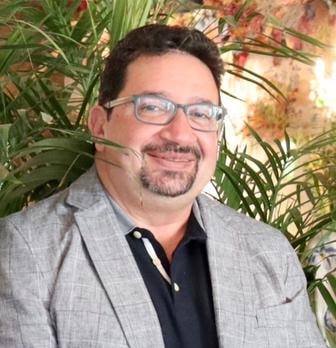
Ahmed M. F. Abd-Elsalam joined the OIB in October 2021 as a research associate. He received his PhD in Islamic Studies from the Martin-Luther University Halle-Wittenberg with the dissertation „Das Verhältnis des beduinischen zum islamischen Recht in sozialem und historischem Kontext“ (The relationship between Bedouin and Islamic law in a social and historical context). At the OIB, he studies social and theological issues of Abrahamic interdependence concerning marriage and divorce as human production of theological and religious knowledge. His research focuses on social and legal transformations in Muslim societies, past and present.
Abd-Elsalam works at the OIB on social and theological issues of Abrahamic interdependence concerning marriage and divorce as human production of theological and religious knowledge. His project "Abrahamitic Interdependence: The Relations of Jewish to Islamic concerning Marriage and Divorce" deals with legal issues of marriage and divorce in Theory and Praxis in the Example of the Jewish communities in Egypt and Iraq in the first half of the last century and its relation to other trans-regional and trans-religious communities.
The project is well-networked with other research institutions in Egypt, Morocco, and Germany.
Previously, Abd-Elsalam worked as a docent and researcher of Islamic Theology at the Centre for Islamic Theology at the University of Münster (2012 – 2021) and as a visiting professor for Religious Comparative Studies at the Humboldt University Berlin (2019 – 2020). He also taught at Al-Azhar University (2011 – 2012) and the University of Innsbruck (2018 – 2022).
Legal realities and transformations in Muslim societies: legal and religious norms between theory, practice, and history.
Islamic Norms and Islamic History (Pre- and Early Islamic History, Middle Ages and Present)
Currently transformation processes in Islamic thought: secularization, Islamization and globalization of norms and values.
10/2005 – 06/2010 | PhD. Islamic Studies |
10/1998 – 11/2003 | M. A. Arab Studies / Islamic Studies |
10/1987 – 05/1991 | B. A. German Studies |
Since 10/2021
10/2019 – 03/2020
| Research Associate at the German Orient-Institut in Beirut (OIB) Redactor of Bibliotheca Islamica Visiting Professor of Comparative Theology in Islamic Perspective at the Berlin Institute for Islamic Theology at Humboldt University in Berlin |
10/2018 – 03/2022
| Guest lecturer at the Institute of Islamic Theology and Religious Education at the University of Innsbruck, Innsbruck - Austria |
05/2016 – 09/2017
| Coordinator and moderator of the event series "Theology -Humanities – Social Sciences" (THSS), a project of the Orient-Institute Beirut (OIB) of the Max-Weber Foundation and the Al-Azhar-Directorate in Cairo, funded by the Federal Foreign Office of the Federal Republic of Germany |
03/2013 – 10/2019
| Coordinator of the international colloquium series "Current Transformation Processes in Islamic Thinking: Religion, Politics and environment" (previously seven international colloquia, supported by third-party funding from DAAD and GIZ) |
11/2012 – 09/2021
| Researcher associate at the Center for Islamic Theology of the University of Münster |
10/2011 – 10/2012
| OIB Coordinator of the German Center in Al-Azhar, Cairo, OIB Coordinator of the teaching program "Islam Studies in the West and Germany" for post-graduate students of Islam-theological faculties of Al-Azhar, and OIB coordinator of the academic Exchange programs of the Islam-theological faculties of al-Azhar with the University of Tübingen - Islamic Studies |
10/2011 – 05/2012
| Guest lecturer at the Department of Islamic Studies in the German Language of the Faculty of Languages of Al-Azhar University |
05/2011 – 10/2012
| Project coordinator of the project "Episteme der Theologie interreligious" at the OIB of the Max-Weber Foundation |
09/2010 – 10/2012 | Research Associate at the OIB, Cairo Office |
02/2009 – 09/2010
| Educational assistant in the field of intercultural and political education at the German Academy DAA-Halle |
10/2008 – 02/2009
| Lecturer for Arabic Language and Literature at the Oriental Institute oftheUniversity of Halle |
2004 – 2005
| Lecturer for Arabic Language and Dialects at the Institute of Oriental Studies of the University of Halle |
2004 – 2005
| A Staff of the SFB 586 Difference and Integration Subproject "Contested Autochthony: Land and water rights and the relation of nomadic and sedentary people in South Kordofan, Sudan" (Project of Prof. Dr. R. Rottenburg, Institute of Ethnology of the University Halle) |
2001 – 2004
| Employees of the project "MENALIB" at the special collection area "Vorderer Orient / North Africa" of the University and State Library of Saxony-Anhalt (DFG project) |
1998 – 2001
| Employees of the project "Pfarrerbuch der KPS" at the Interdisciplinary Center for Pietism Research of the University Halle |
Since 2022 Since 2022 Since 2022
Since 2021 Since 2020 Since 2017 | Consultant at the Global Institute for Arabic Renewal Consultant at the Association of Heritage Experts in the Arab World Advisor Board of the Nile Valley Journal for Human, Social and Educational Studies and Research - Faculty of Arts - Cairo University, Khartoum Branch Evaluator at the German Academic Exchange Service (DAAD) Advisor Board of Journal of Architecture, Arts and Humanistic Science German Society of Islamic Theology |
2010 – 2014 | Board member of Ver.di Sachsen-Anhalt Süd |
2006 – 2017 | The International Society for Islamic Legal Studies (ISILS) |
Since 2006 | German Association for Law and Society (VfR) |
Since 2005
| The German Working Group Vorderer Orient for Contemporary Research and Documentation (DAVO) |
10/2001 | DAAD-Prize for international students at the German universities 2001 Martin Luther University Halle |
10/2021 -
05/2022 – 10/2023
11/2019 – 09/2021 07/2016 – 10/2019 03/2013 – 10/2019 | Abrahamitic Interdependence: The Relations of Jewish to Islamic concerning Marriage and Divorce Discussing the Interdependence between Humans, Religion and Environment (DIHRE) Abrahamitic Interdependence – Religious and Theological Knowledge as Trans-Cultural Product of Multi-Confessional Relations Islamic Environment Theology Current Transformation Processes in Islamic Thinking – Colloquium Series |
01/2013 – 10/2017
| Al-Azhar and the Upheaval in Egypt (2011–2013): Documents and Controversy (Al-Azhar Documents) |
11/2012 – 10/2013
| Maqasid as a norm between theory and application – hierarchy of legal norms
|
October 2021 – September 2024
With the project "Abrahamitic Interdependence", I want to demonstrate that Jews and Judaism formed a significant part of the society, culture, and contemporary history of most Arab countries and societies until recently. The project emphasises the similarities between Judaism and Islam concerning societal, religious concepts such as "marriage and divorce". With this project, I hope to throw a stone into the still water and thus stimulate the interreligious and intercultural Islamic-Jewish dialogue. Therefore, it is essential to network the project with relevant research institutions in the Arab world.
The project Abrahamitic Interdependence also explores the influence of social issues in plural communities on the built and rebuilt religiose norms and knowledge. It examines exemplarily the relation of the Islamic to the Jewish in marriage law in various social and historical contexts. When studying Islamic law, it is noticeable that numerous Islamic legal norms correspond to the Jewish ones (Bialblocki 1928). Bialoblocki speaks about the influence of the Jewish on Islamic norms. Bialoblocki is in the tradition of Abraham Geiger (1810-1874). According to him, the older religion, Judaism, influences the younger religion, Islam. However, commonalities in social institutions like marriage in both religions can have transcultural origins.
The project "Abrahamitic Interdependence" consists of three sub-projects. The results of each are to appear in one of three planned publications. Two of them will be in German and one in Arabic. The project is even linked to the Projects of the Cairo Office entitled "Interdependence Relations: Humans, Religions and Environments."
The first sub-project is a historical-critical study of the book “Materialien zum islamischen und jüdischen Eherecht“ by Samuel Bialoblocki (1928). This book discusses that several norms in Islam and Judaism concerning marriage and divorce concur. Some verses of the Koran address Jewish debates in the Talmud on the issue of marriage. Bialoblocki does not recognise that The influences can be mutual and not just in one direction. Abrahamic interdependence results from social transcultural relationships and encounters in everyday life. We do not know if is that the case at the time of the prophet Mohammed. Even more, follow the traditions of Prophet Muhammad their ethical concept that is not necessarily based on the revelation (Quran). His concept is based closely on the life of his first wife, Khadija. That is why I call it the Khadija project or issue. The Khadija project/issue had the goal of liberalising tribal women and strengthening their role and status in society by securing women's financial independence through mahr and mirath.
The second sub-project aims to provide Arabic readers and researchers with reliable scientific information on marriage and divorce in Judaism in the present and the past. Such work can enrich the Arabic specialist library. The results of the first part of the project will also be included here.
The third sub-project is the central part of the study. I will research the Jewish marriage law in Egypt and Iraq in the first half of the 20th century. I will study normative changes in legislation and practice-reality. The legislative change characteristics in Egypt and Iraq will be compared in order to be able to determine possible unique cultural influences through the integration societies. Several marriage certificates of the Egyptian Jewish communities in Cairo and Alexandria at the time of the study will be analysed to examine the reality of practice.
Marriage certificate from Cairo around 1940
Author: Dr. Ahmed Abd-Elsalam
Abd-Elsalam@orient-institut.org
Abrahamitische Interdependenzen? Eherecht im Judentum und Islam, (OIS 11). Beirut/Cairo: Orient-Institut Beirut (forthcoming Sep. 2026).
Early Islamic Matrimonial Forms and Reforms – Does Islamic Law a Case of Legal Pluralism? (forthcoming December 2025).
Theologie und Normen im Wandel – Islamisierung altarabischer Rechtsnormen, Bielefeld:Transcript Verlag (2021). DOI: 10.1515/9783839455661
Das beduinische Rechtssystem und seine theoretische Grundlage , (BTS 136). Würzburg: Ergon-Verlag (2015).
And Yasmin Amin. New Approaches in Islamic Ethics: Gender – Environment – Biomedical Ethics, in BTS (forthcoming 2026).
Transformation of Religious Authorities and Discourses after the Egyptian Revolution 2011 , (OIS 10). Beirut/Cairo: OIB/Red Sea Publications (2025) DOI: 10.25360/01-2025-00022
And Yasmin Amin (eds). Discussing Interdependencies – Women and Families across Religions, (OIS 9). Beirut/Cairo: OIB/Red Sea Publications (2025) DOI: 10.25360/01-2025-00021
Discussing Interdependencies – Religion, Religiosity and Society , (OIS 8). Beirut/Cairo: OIB/Red Sea Publications (Oktober 2024) DOI: 10.25360/01-2024-00011 .
Discussing Interdependencies – Theology of Coexistence , (OIS 7). Beirut/Cairo: OIB/Red Sea Publications (June 2024). DOI: 10.25360/01-2024-00003.
und Abdallah, Mahmoud (Hrsg.), Religiöse Institutionen in Krisenzeiten: Anfragen und Erträge aus Ethik, Theologie und Religionsgemeinschaften, (Theologie des Zusammenlebens). Ostfildern: Grünwald Verlag (2023).
Umiyyat an-nabiy / أمية النبي (Herausgeber und Vorwort), Sebastian Günther und Khaled Muhammad Abduh, Erste Auflage, Kairo: Sijal Publications (2014).
Waṯāʾiq al-Azhar: al-marǧaʿiyya ad-dīniyya mā baʿd aṯ-ṯawra al-miṣriyya / وثائق الأزهر: المرجعية الدينية ما بعد الثورة المصرية (Herausgeber) Kairo: Sijal Publications, (2016).
“Hadith Studies in the Age of Digital Humanities” in Yaşar Sarıkaya, Mehmet Soyhun and Patrick Brooks (eds.) Ten Theses for a New Way of Teaching and Learning about Hadiths, Berlin: De Gruyter (forthcoming 2025).
„Al-Muw ā ṭanah Ka-Mafhūm Dīnī” in Abdalkarīm Marzūq and Abdalraḥīm Al-ʿAṭrī (eds.) Al-Dīnī wa-l-hijrah: Ḥarakiyy ā t wa-taq ā ṭuʿ ā t. Fes: Ibn Khaldun Centre for Migrations Studies (2025), pp. 5-16.
„Waṯīqat al-Madīna w-mašrūˁ at-taˁayuš fī muğtamˁ taˁaddudī”, in Samīr Būdīnār (Hrsg.) Șināˁat as-silm ad-dawlī: Istilhāam as-sīyāqāt al-muštaraka. (Ribat: Markaz al-ḥukamā̛ li-buḥūṯ as-salām (Feb. 2025) .
„ Takrīs al-ʿUnf ḍid al-Nisā ʾ  baina l-Naṣṣ wa-l-Taʾwīl” in Ahmed Abd-Elsalam and Yasmin Amin (eds.). ). Discussing Interdependencies – Women and Families across Religions, (OIS 9). Beirut/Cairo: OIB/Red Sea Publications (2025), pp 10.
“The Khadījah Project or The concept behind the Marriage Law in Early Islam” in Ahmed Abd-Elsalam and Yasmin Amin (eds.). ). Discussing Interdependencies – Women and Families across Religions, (OIS 9). Beirut/Cairo: OIB/Red Sea Publications (2025), pp 243-258.
Al-Mu ̒ assasah al-dīniyah wa-l-thawrah/The religious Institution and the Revolution” in Ahmed Abd-Elsalam. Islamic Authorities and Discourses after the Egyptian Revolution 2011 (OIS10). Beirut/Cairo: OIB/Red Sea Publications (2025), p. 8-10.
“l-Mu ̒ assasah al-dīniyah wa-l-sultah/The religious Institution and the Power”in Ahmed Abd-Elsalam. Islamic Authorities and Discourses after the Egyptian Revolution 2011 (OIS10). Beirut/Cairo: OIB/Red Sea Publications (2025), p. 11-18.
And Sara Binay. „Sustainable Development in Islamic Theology: from occasion-driven approaches to a comprehensive understanding of sustainability using the example of (water-) fatwas” in Bernhard Bleyer and René M. Micallef (eds.) Religions Journal, Volume 5, Issue 12, Special Issue: Sustainable Development: The Normative Contribution of Theology. 2024. doi: 10.3390/rel15121487.
„Religiöse Institutionen in Krisenzeiten – Politisches Handeln religiöser Institutionen im Zeichen gegenwärtiger Umbrüche“, in Ahmed Abd-Elsalam und Mahmoud Abdallah (Hg.): Religiöse Institutionen in Krisenzeiten: Anfragen und Erträge aus Ethik, Theologie und Religionsgemeinschaften, (Theologie des Zusammenlebens). Ostfildern: Grünwald Verlag (2024), 91-101.
„Ehe als Ansatz frühislamischer theologischer (Re)Form: Ehe, Eheschließung, Ehe in Nahbeziehungen – besonders rechtliche Regelungen der Eheschließung in Nahverhältnissen in frühislamischen Rechtsquellen/Marriage as an Approach to Early Islamic Theological (Re)Form: Marriage, Marriage in Close Relations – Especially Legal Regulations for Marriage in Affinity Relationships in Early Islamic Legal Sources“in Britta Müller-Schauenburg (ed.). Ancilla Iuris (2024) – Special Issue: Marriage in Close Relations. p. 44–66. DOI 10.26031/2024.044 .
„Introduction: The Theology of Coexistence, and What Next?”, in Ahmed Abd-Elsalam (ed.) Discussing Interdependencies – Theology of Coexistence , (OIS 7). Beirut/Cairo: OIB/Red Sea Publications (June 2024), p. 249-252. DOI: 10.25360/01-2024-00003.
„Theology of coexistence in Islam: from ummah to muwāṭana”, in Ahmed Abd-Elsalam (ed.) Discussing Interdependencies – Theology of Coexistence , (OIS 7). Beirut/Cairo: OIB/Red Sea Publications (June 2024), p. 309-323. DOI: 10.25360/01-2024-00003.
"إکو-إسلام: مسار جديد للفکر الإسلامي في الغرب" / „Eco-Islam: A new path of Islamic thought in the West ”, in MJAF , 7, 6, Cairo 2022. DOI: 10.21608/MJAF.2022".125193.2736 .
“ الأعراف العشائرية القضائية – تراث لامادي مهمل للمنطقة العربية / Tribal " norms – A neglected intangible heritage of the Arab World“, in MJAF, 6, 3, Cairo 2021, 610 – 624. DOI: 10.21608/mjaf.2021.67637.2267
„Von der Tribalität in die Islamität – Wanderung der Rechtsnormen: Ein Beitrag zur Entstehungsgeschichte des Islamischen Normensystems“, in Mouhanad Khorchide und Milad Karimi (Hg.) Jahrbuch für Islamische Theologie und Religionspädagogik – Band 6/2017, Freiburg im Breisgau: Kalam Verlag (2020), 13 – 45.
„Umwelt-Dschihad & Öko-Islam - Eine aufstrebende muslimische Bewegung“, in Mouhanad Khorchide und Sara Binay (Hg.): Islamische Umwelttheologie: Ethik, Norm und Praxis, Freiburg im Breisgau: Herder Verlag (2019), 187 – 205.
„Al-Muʾassasa ad-dīnīya wa-idārat ad-dawla/al-muğtamaʿ - qirāʾa fī waṭāʾiq al-Azhar / المؤسسة الدينية وإدارة الدولة/المجتمع – قراءة في وثائق الأزهر “, in Ahmed Abd-Elsalam und Mohammed Helmy (Eds.) Waṯāʾiq al-Azhar: al-marǧaʿiyya ad-dīniyya mā baʿd aṯ-ṯawra al-miṣriyya, Kairo: Sijal Publications (2016) 85 – 111.
„Solidarität und kulturelle Sensibilität als eine prophetische Lehre“, in Una Sancta – Zeitschrift für ökumenische Begegnung, Heft 2 2016, 71. Jahrgang (2016), 113 – 117.
„Erwiderung auf Christoph Wulf „Bildung – Eine transkulturelle Aufgabe“, in Sarhan Dhouib (Ed.) Demokratie, Pluralismus und Menschenrechte – Transkulturelle Perspektiven, Weilerswist: Velbrück Wissenschaft (2014), 260 – 262.
„Forum Westen und Islam: Klare Grenzen ziehen“, in Kulturaustausch, Heft 4, Institut für Auslandsbeziehungen (2014), 72.
„Stammesrecht in traditionellen intratribalen Beziehungs- und Machtverhältnissen am Beispiel arabischer Stämme in Nordkurdufan, Sudan – Beobachtungen aus dem Feld“, in Josef Estermann (Hg.) Interdisziplinäre Rechtsforschung zwischen Rechtswirklichkeit, Rechtsanalyse und Rechtsgestaltung. Beiträge zum Kongress „Wie wirkt Recht?“, Beckenriel: Orlux-Verlag (2009), 20 – 34.
„Die Bibel des Ibn Kathir: Textkritik zu Gen 22 als Argument des Verfälschungsvorwurfs“, in Johannes Thon (Hg.) The Claim of Truth in Religious Contexts, in Orientwissenschaftliche Hefte, Heft 27, Halle: MLU-Halle (2009), 29 – 36.
„Al-Ḥisba fī al-ʿaṣr al-mamlūkī baina at-tawẓīf ad-dīnī as-sīyāsī wa-l-idāra al-madanīya / الحسبة في العصر المملوكي بين التوظيف الديني السياسي والإدارة المدنية “, in Mahmoud Haddad and Arnim Heinemann (Eds.) Towards a Cultural History of the Mamluk Era , Würzburg: Ergon-Verlag (2009), 127 – 143.
“The Practice of Violence in the ḥisba-Theories”, in Iranian Studies, vol. 8 nr. 4. (2005), 547 – 554.