
Research Associate
Email: thuselt@orient-institut.org
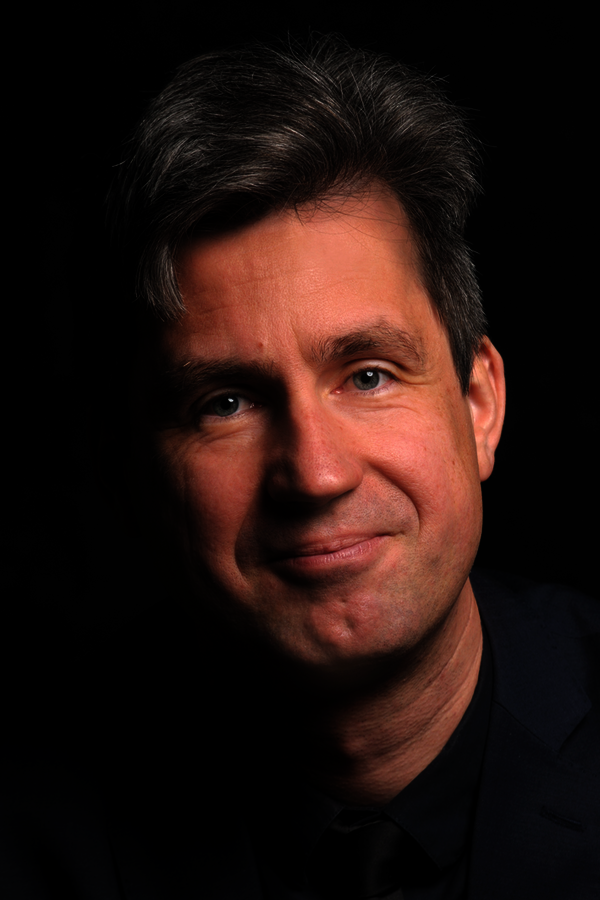
Christian Thuselt joined the OIB in October 2021 as a research associate and is responsible for the in-house production of the “Beiruter Texte und Studien” (BTS). He holds a MA from Tübingen University and received his PhD in Social Sciences from Roskilde University with a study on Lebanese political parties as expressions of a global modernity. From 2009 till 2021 he worked at Erlangen University, most recently as an assistant professor. His research at the OIB focusses on Iraqi statehood as part of a discourse on legitimacy.
The research project aims to bring together two research paradigms that have hardly been connected so far: the study of spatially bound identity patterns in political geography and a political science perspective on the constitution of political orders. Using an interpretative-constructivist approach on statehood, borrowing from political philosophy and philosophical anthropology, it is argued that three dimensions of political-territorial orders can be analytically distinguished: (1) sociocultural differentiations separate an "us" from the "others" (identity) and (2) in many cases naturalise this differentiation with, among other things, the delimitation of spaces through a location of supposedly pre-existent spaces based on these practices. Finally, they connect these two dimensions with the conception of a "polity" (3), understood as the formal constitution of societies.
By focusing on "polity", we avoid limiting research to formal statehood without losing sight of the importance of polity. Empirically, we focus on the designs of "future spaces" that have been produced and disseminated by key actors in the region since 2003. The aim of this project is to gain, against the background of the destabilisation or "dislocation" of nation-state orders in Iraq, a comparative and systematic overview of the orders that have been designed by central actors in the region since 2003. On this basis, we contribute to the debate on possible post-war orders in the region.
Since the question now obviously arises in the Middle East whether, analogous to sub-Saharan Africa, a "post-Westphalian" order beyond legalistic statehood could also be a relevant vision of the future in the Middle East, the selection of cases must be oriented to the positioning of relevant actors in relation to the existing statehood of the region, i.e. Iraq as an internationally recognised subject of international law. First and foremost, we will focus on the communication of political orders, which is to be understood as a hegemonic practice and aims at hegemony in the sense of an unquestioned validity of order.
The first group includes those actors who exercise governmental power in Iraq, or who at least refer most outspoken to it. They thus strive for a re-establishment of a centralised polity. We will here analyse Muqtada al-Sadr’s discourse. In a second group, we survey actors who strive for a new polity based on an ethnic "us"-identity, here: the Iraqi KDP. A third group consists of those actors who initially define their identity in a way, often dubbed “sectarianisation”, which seem to be oriented primarily against the discursive hegemony of just another actor. In their apparent retreat into the lifeworld of the "microstructure", they seem at first glance like prototypes of a "denationalisation" of the Middle East, although that seems to be rather doubtful.
In 2022 and 2023, we analysed Muqtada al-Sadr's discourse, which is certainly the most influential in Iraq at the moment with regard to the defence of established statehood. We have succeeded in localizing core elements of the untouchable resources of the order al-Sadr seeks to establish. Of particular relevance here were the questions of embedding the underlying normativity into regional narrative patterns, especially the significance of the region as a normative point of reference, but also the central question of the connection between secularity and modern statehood, and Sadr's populist political style. His case offers an interesting input into research on populism which largely focusses on Western cases: obviously, it makes more sense to understand populism as a style than as a ‘thin ideology.’ Like all populisms, also this one walks a thin line between democratic self-articulation of at least part of society and anti-democratic practices of excluding other Iraqis from the rhetorical constitution of ‘the people’ as a homogeneous body politic. Yet, his discourse on ‘the people’ and the nation-state allows him to increase his own factual power while at the same time shifting partially at least the conditions under which authority is recognized. Sadr oscillates here between different logics: the political with the state and its system with its very own logic, and the religious. These findings necessitate further exploration of the question of secularity and statehood. It is becoming apparent that a purely Asadian-inspired understanding of secularity as a discursive practice will not suffice to cope with the underlying systemic logics.
Author: Dr. Christian Thuselt
thuselt@orient-institut.org
Monography:
Lebanese Political Parties: Dream of a Republic (Abingdon: Routledge, 2021).
Articles:
Book Reviews:
Scientific supervised publications:
Contributions to the press:
Presentations:
21.09.2023 Annual Congress of the Deutsche Arbeitsgemeinschaft Vorderer Orient (DAVO) in Vienna; “Muqtada al-Sadr as a case of populism in the Middle East. A balancing act between representation and transcendence”
11.-13.03.2023 OIB Conference “Living in a Digital Age”; “Digital Populism and Religious Authority”
20.-22.02.2023 MECAM Travelling Academy “Solidarities in/between the Middle East & North Africa”; “Solidarity and the Normativity of Modernity in some Lebanese and Iraqi political discourses”
14.-15.05.2022 Workshop Reading Islams and Modernities with ʿAziz al-ʿAzmeh, organized by the “Akademie für Islam in Wissenschaft und Gesellschaft” (AIWG) at Erlangen (as Discussant)
10.07.2021 26. World Congress of Political Science der International Political Science Association “New Nationalisms in an Open World”; Presentation: “Nationalism in the Middle East: Between a Nationalist Utopia and Methodological Post-Nationalism?”
29.04.2021 MA-Course “History, Politics and Society in Lebanon” at Erfurt University; Presentation: “Political Normativity and Self-Narration in Lebanon: A Critical Perspective”
22.-23.05.2020 Reading Course “Politische Anthropologie” Philosophical Seminary at Erlangen University; Presentation: “Elemente einer Anthropologie des autoritären Staates im Nahen Osten“
06.-08.09.2018 Workshop “Conceptualizing Sectarianization: Perspectives on the Dynamics of Ethno-Religious Difference in Studying the Middle East and North Africa” at Berne University; Presentation: “‘The Country as made out of Millets and Sects’ – Sectarianists as Modernists in Lebanon“
16.-20.07.2018 World Congress for Middle Eastern Studies (WOCMES) in Seville: “Lebanon: Decentralization as a break with Modernism?”
10.11.2017 Centre for Euro-Oriental Studies (CEOS) in Erlangen; Presentation: “Moderne und Neo-Patrimonialismus: Elemente personaler Herrschaft in libanesischen Parteien“
03.-04.11.2016 Workshop „Region(s), Religion(s), Regime(s): The Interplay of Politics and Religion in East Asia and the Middle East” at Erlangen University: “Politicized Religion among Lebanese Christians: A Religiously Inspired Self-Location between Radicalization and Consociationalism”
28.-29.01.2016 Conference “Political Parties in the Middle East: Past, Present and Future Perspectives” at Manchester University: “Personalized Party-Leadership in Lebanon as a Social Contract”
18.-22.08.2014 World Congress for Middle Eastern Studies (WOCMES) in Ankara; Panel: “Lebanon in Tension: Political Parties between Modernity and a ‘New’ Leadership”; Presentation: “Between Personal Leaderhip and ‘Training in Morals’ – Lebanese Political Parties as Products of a Hybridization Process”
10.-11.07.2014 Workshop „Milizen und die Herstellung von (Un-) Sicherheit an der Universität Osnabrück within the framework of the DFG-project “Security Governance durch Milizen”; Presentation: “Die Lebanese Forces als Staatssurrogat? Versuch und Grenzen eines Nation-buildings im Bürgerkrieg”
23.-23.09.2013 32. Deutscher Orientalistentag in Münster; Panel: “Libanon: neue politische und soziale Organisationsformen”; Presentation: “Erscheinungsformen, Funktionen und Bedingungen des Charismas in der libanesischen Politik am Beispiel christlicher Parteien”
04.-06.10.2012 Jahreskongress der Deutschen Arbeitsgemeinschaft Vorderer Orient (DAVO) in Erlangen; Panel: Religiöse Bewegungen als politische Akteure im Nahen Osten“; Presentation: Persistenz eines Milieus: Die christliche ‘Ideologie der Berge’ im Libanon”