
Research Associate
Email: Ermis@orient-institut.org
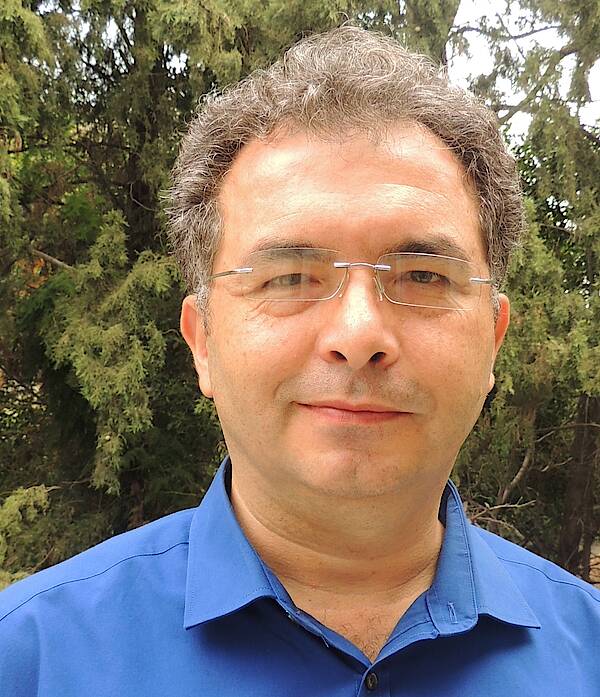
Fatih Ermiş joined the OIB in 2018. He received a doctorate from the University of Erfurt with a thesis entitled “Ottoman Economic Thinking before the 19th Century.” He holds an MA in economic history from Marmara University and a BA in economics from Boğaziçi University, both in Istanbul. Before joining the OIB, he worked as a research assistant for the Chair of History of West Asia at the University of Erfurt and, most recently, as a post-doctoral associate at the Centre for Islamic Theology, University of Tübingen. His main research interest is pre-modern Islamic intellectual history, with a particular focus on intellectual endeavours in Ottoman lands. His work is also concerned with economic, social, religious and literary writing as well as with Sufi thought. His research at the OIB focuses on a famous book of ethics, Aḫlāḳ-ı ‘Alāʾī, written in Damascus by the Ottoman scholar Ḳınālīzāde ʿAlī Çelebī (1510 – 1572).
This project deals with the Ottoman understanding of ethics at the intersection of philosophy, mysticism and sharia using the example of Ḳınālīzāde’s Akhlāḳ-ı ʿAlāʾī. Ḳınālīzāde ʿAlī Çelebī (1510-1572), perhaps the most influential moral philosopher in the history of the Ottoman Empire, wrote the Akhlāḳ-ı ʿAlāʾī between 1563 and 1565 in Damascus, where he served as the chief judge.
As already pointed out by some researchers, the Akhlāḳ-ı ʿAlāʾī had been the most popular and widely discussed ethical work in the Ottoman Empire and it served as the basis of almost all textbooks of ethics until the modern times. It is a masterpiece that is highly representative of the Ottoman spiritual world. In the introduction to his book, Ḳınālīzāde argues that because the previous ethics literature had been Persian that it should now be considered obsolete. He further argues that he intentionally wrote his book in Turkish because he saw a great need for Turkish ethics literature. Akhlāḳ-ı ʿAlāʾī eventually became the standard work of ethics in Ottoman madrasas.
The main research question of this project is the following: How did Ottoman intellectuals deal with the norms of human behaviour with regard to the relationship between man and man, man and environment and man and God? Furthermore, how did they develop a unified system that regulated human behaviour at these three levels?
The project is structured at the following two levels:
1. How did Ḳınālīzāde process and reinterpret the previous ethical literature? Here is an intensive source analysis intended, thereby representing both the character of Akhlāḳ-ı ʿAlāʾī and Ḳınālīzāde’s contribution to ethics as a discipline. It should also be noted that as a judge, Ḳınālīzāde made the tradition of Ṭūsī and the akhlāq genre part of the Ottoman spiritual world.
2. How did Ḳınālīzāde develop his ethical system? Main frameworks, terms, questions and problem areas of ethics are discussed here. In addition, Ḳınālīzāde’s personal networks as well as the circumstances of his time are taken into consideration.
According to Ḳınālīzāde, justice is not a part of virtue, justice is virtue. If an individual manages to follow the middle path between two extremes, he achieves a balance in his soul in terms of the three powers of the soul: desire, irascibility and reason. This individual is, by definition, a just man.
With respect to the middle path, Ḳınālīzāde distinguishes between absolute and relative middle. Absolute middle is the arithmetic midpoint, in the same way that four is in the middle of two and six. However, this is completely irrelevant to ethics. The relative midpoint is an essential instrument for the analysis of the human character. In this regard, virtues are different for each individual. Moreover, virtues change at different stages of a human life in accordance with changing circumstances. A certain trait may be a virtue for one individual and vice for another individual, or it may be a virtue for one individual at one stage of life, and a vice at another. Ḳınālīzāde here refers to the definition of justice as “putting everything in the right place”. These right places (or the golden mean between two extremes) must be determined personally and in a dynamic process. Justice (ʿadālat) thereby becomes equilibrium (iʿtidāl).
Each individual must first achieve balance in his soul. Justice then influences the families, because just individuals form just families. A society made up of just families will again form a just society and be governed by a just ruler. This upward justice also implies a downward justice: a society ruled by a just ruler will form just families, and just families will raise just individuals.
Author: Dr. Fatih Ermiş
Ermis@orient-institut.org
A History of Ottoman Economic Thought: Developments before the 19th century, Oxford and New York: Routledge, 2014.
Osmanlı’da İktisadi Düşünce Tarihi, trans. by Mustafa Tek, Ayşen Edirneligil, Istanbul: Albaraka Yayınları, 2020.
Maḥmūd Šabistarī’s Rosenflor des Geheimnisses, trans. by Hammer-Purgstall, edited and annotated by Fatih Ermiş, Frankfurt am Main: Peter Lang Edition, 2017.
Mahmud Şebüsteri, Gülşen-i Râz, translated and annotated by Fatih Ermiş, Istanbul: Ketebe, 2021.
“Bin Altınlık Hazine: Gülşen-i Râz - Önemi, Hakkındaki Literatür, Ele Aldığı Belli Başlı Konular”, (Treasure of Thousand Gold Coins: Gulshan-i Rāz - Its Significance, Literature on Gulshan-i Rāz and its Main Subjects)Türkiye Araştırmaları LiteratürDergisi, vol. 15, issue 30, 2019, pp. 155-180.
Translation of Namık Kemal’s article “Renan Müdafaanamesi” into German as “Die Verteidigung (des Rufs des Islam) gegen Renan”, in: Birgit Schäbler, Moderne Muslime. Ernest Renan und die Geschichte der ersten Islamdebatte 1883, Schöningh Verlag, 2016, pp. 93-106.
Translation of Suat Mertoğlu’s article “Doğrudan Doğruya Kur’an’dan Alıp İlhamı: Kur’an’a Dönüş’ten Kur’an İslamı’na” into German as “‛Direkt vom Koran inspiriert’: Rückkehr zum Koran oder ein Koranischer Islam”, HIKMA – Zeitschrift für Islamische Theologie und Religionspädagogik, vol. 5, issue 8, 2014, pp. 9-37.
Onur İnal, Yavuz Köse (eds.), "Seeds of Power. Explorations in Ottoman Environmental History", Winwick, Cambridgeshire 2019: The White Horse Press, xvii, 292 pp., ISBN: 9781-874267-997 (Hardback). In: H/Soz/Kult, https://www.hsozkult.de/review/id/reb-29034?title=o-inal-u-a-hrsg-seeds-of-power (2021)
Book review of Meltem Toksöz’s The Çukurova: From Nomadic Life to Commercial Agriculture, 1800-1908, Türkiye Araştırmaları Literatür Dergisi, vol. 3, No: 6 (2005).
Book review of Charles Issawi’s The Economic History of Turkey, Türkiye Araştırmaları Literatür Dergisi, vol. 1, No: 1 (2003).
Warum erzählen die Sufis Geschichten? - Von der theoretischen zur praktischen Weisheit // 15 JUNI 2022.
“Typology of “Turk” in Islamicate Literature and Ethical Works”, paper presented in the workshop on Typologies in the Islamic Ethical Discourse // 10-12 MARCH 2022.
" Ḳınālīzāde: Political system in the Ottoman Empire", Alliance of Civilizations Institute, Ibn Haldun University, ISTANBUL // 23 NOVEMBER 2021.
"New Garments for Old Wisdoms: Ḳınālīzāde ʿAlī Çelebī's ethics", Ibn Haldun University, ISTANBUL // 24 NOVEMBER 2021.
"Drawing Inspiration from Ḳınālīzāde ʿAlī Çelebī, Ottoman Scholar of Sixteenth Century" in the radio show Shaping Tomorrow, Radio IKIM, MALAYSIA // 27 NOVEMBER 2021.
"The Soul, Virtues and Circle of Justice according to Ḳınālīzāde ʿAlī Çelebī", in the radio show Shaping Tomorrow, Radio IKIM, MALAYSIA // 11 DECEMBER 2021.
"Bin Altınlık Hazine: Gülşen-i Râz", Medeniyet University, ISTANBUL // 20 DECEMBER 2021.
“Storytelling for Transmission of Ethics: Theoretical versus Practical Wisdom”, at the conference: “Narrative and Ethics: The Morals of the Qurʾanic Stories and Beyond”, CILE, Hamad bin Khalifa University, 27-29 January 2020, Doha.
“Main Parameters of Ottoman Economic Thought”, Türkisch-Deutsche Universität, 2 December 2019, Istanbul.
“Maḥmūd Shabistarī’s Rose Garden of Secrets: Treasure of Thousand Gold Coins”, American University of Beirut (AUB), 20 February 2019, Beirut.
“Charā Charḫa-i ʿAdālat tā Bīnihāyat Idāma Nadārad?” (“Why does the Circle of Justice not Continue Perpetually?” in Persian), Firdawsi University, 7 February 2017, Mashhad, Iran.
“Main Parameters of Ottoman Economic Thought”, University of Ghent, 14 November 2016, Ghent, Belgium.
“Economic Perceptions of 16th and 17th Century Muslim Scholars: Kınalızade, Katib Çelebi, Naima”, Universita Degli Studi Firenze, Corso Di Storia Del Pensiero Economico, 7 May 2014, Florence, Italy.
Workshop on Typologies in the Islamic Ethical Discourse // 10-12 MARCH 2022.
Workshop “Environmental History of the Ottoman Empire”, Orient-Institut Beirut, 10–12 December 2020, OIB.
Workshop “Conversion from/to Islam”, Universität Tübingen, 11–14 May 2017, Tübingen.
Lecture Series “Wissenstransfer in der türkisch-iranischen Welt” (Transfer of knowledge in the Turco-Iranian World), Universität Tübingen, winter term 2015–16, Tübingen.
Workshop “Islamische Tradition: Vom Autor zum Leser” (Islamic Tradition: From Author to Reader), Universität Tübingen, 27–28 April 2015, Tübingen.