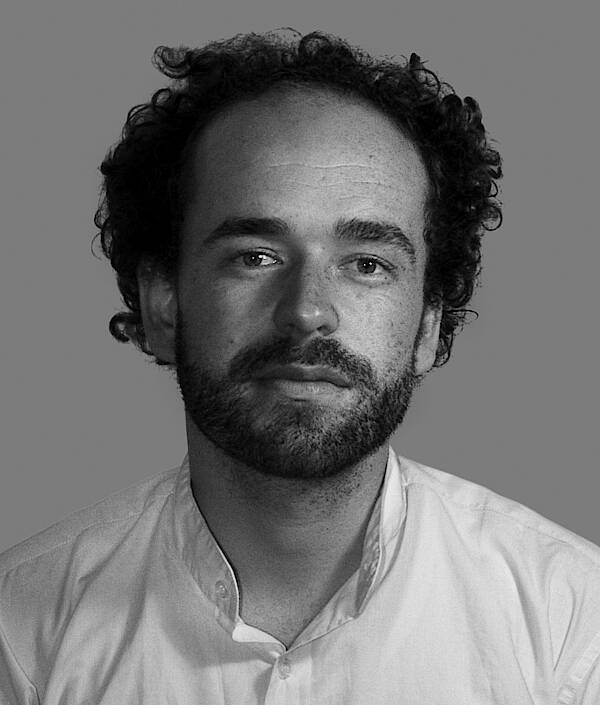
Research Associate
Till Grallert joined the OIB in 2014. His research and teaching focuses on the social and spatial history of late Ottoman cities, the socio-linguistics of early Arabic newspapers and digital humanities (DH) outside the global north. He completed his PhD at the Berlin Graduate School Muslim Cultures and Societies in 2014 with a thesis entitled “To Whom Belong the Streets? Property, Propriety, and Appropriation: The Production of Public Space in Late Ottoman Damascus, 1875 – 1914.” Till’s current research project aims at establishing a genealogy of urban food riots as a “repertoire of contention” (Tilly) and as genuine political negotiations of the social contract between the rulers and the ruled in the Eastern Mediterranean between the eighteenth and the twentieth centuries. He is a co-organiser of the “Digital Humanities Institute – Beirut,” the developer and a core contributor to “Project Jarāʾid,” an online chronology of Arabic periodicals before 1900, and he contributed to a recent collection on “Digital Humanities and Islamic & Middle East Studies” (ed. Elias Muhanna, 2016). Within the framework of his research project “Open Arabic Periodical Editions” (OpenArabicPE), Till works on open, collaborative and scholarly digital editions of early Arabic periodicals such as Muḥammad Kurd ʿAlī's journal al-Muqtabas and ʿAbd al-Qādir Iskandarānī's al-Ḥaqāʾiq.
This project scrutinises the phenomenon of urban food riots in the Middle East between the mid-eighteenth and the mid-twentieth centuries as contentious performances that form and follow certain repertoires (C. Tilly). In doing so, the project addresses social relations—between genders and social strata; between agents and addressees of protests and their conceptions of the social relations tying them together; between contentious performances and the built environment facilitating some actions and obstructing certain other actions.
Despite being everything but quotidian and even though the sources’ elite-bias cannot possibly be overcome, when analysed as performances, food riots allow us to scrutinise the legitimacy of political power and political systems. This follows the well-established observation that food riots are never spontaneous acts of mindless mobs, but follow a limited and rather stable set of repertoires that are deeply rooted in prevailing social norms. Through the tactics adopted by the protesters, food riots reveal the sets of commonly held beliefs among large segments of the populace at any given time. As such, they provide an insight into the stability or volatility of urban regimes during the paradigmatic shift from an ancien régime to the modern nation state.
Explorative research established at least 45 distinguishable and rather equally distributed food riots between the mid-eighteenth and mid-twentieth centuries in Acre, Aleppo, Beirut, Damascus, Hama, Homs, and Jaffa. Even a superficial look at the empirical traces reveals that over the entire period under study, women figured prominently, if not predominantly, in food riots throughout the Middle East. Second, most of these riots raised inherently political demands on the ruling authorities and in the majority of cases protesters did not violently seize grain supplies or attack food suppliers. In line with observations in other regions of the globe, the project argues that food riots had the function to regularly remind the rulers of their duty to provide a fair living for the ruled rather than to grant immediate access to foodstuffs through looting. Accordingly, many food riots took place neither at the central Friday Mosques nor in the vicinity of grain stores. Instead the demonstrators marched to the seat of the ruling authorities and public places par excellence. Thus, the project aims at establishing a genealogy of 200 years of highly visible and audible female political participation in public places.
The project employs four major bodies of primary sources: edited chronologies, the Ottoman archives in Istanbul, German, British, French, and American consular archives, and, from the second half of the nineteenth century onwards, local and regional newspapers as well as ego documents.
Author: Till Grallert
grallert@orient-institut.org
OpenArabicPE establishes a framework for open, collaborative, and fully-referenceable scholarly digital editions of early Arabic periodicals. The guiding principles of OpenArabicPE can be summarised as accessibility, sustainability, credibility. It is developed against the backdrop of two editions of Arabic periodicals from the early twentieth century: Muḥammad Kurd ʿAlī’s Majallat al-Muqtabas (published in Cairo and later Damascus between 1906 and 1917/18) and ʿAbd al-Qādir al-Iskandarānī’s al-Ḥaqāʾiq (also published in Damascus, 1910–12). OpenArabicPE shows that through re-purposing well-established open software and by bridging the gap between popular, but non-academic online libraries of volunteers and academic scanning efforts as well as editorial expertise, one can produce scholarly editions that offer solutions for most of the problems pertinent to the preservation of the early periodical press in the region: active destruction by war and cuts in funding for cultural heritage institutions; focus on digital imagery due the absence of reliable OCR technologies for Arabic fonts (Recent advances in OCR technology based on neural networks and deep learning are to be published by the Open Islamicate Text Initiative (OpenITI) project in 2018 but they still require transcriptions as training data); absence of reliable bibliographic metadata on the issue and article level; anonymous transcriptions of unknown quality; slow and unreliable internet connections and old hardware.
In more concrete terms, we start with digital texts available from grey online libraries, such as al-Maktaba al-Shāmila. They suffer from being of unknown provenance, editorial principals, and quality and they lack most—if not any—information linking the digital representation to a printed original, namely bibliographic meta-data and page breaks, which makes them almost impossible to employ for scholarly research. Most of these immediate shortcomings could be remedied by access to facsimiles, by closely linking the digital text to digital imagery of the printed page, and by transcribing missing bibliographic information from the facsimiles. Hathitrust, the British Library’s “Endangered Archives Programme” (EAP), MenaDoc or Institut du Monde Arabe provide such facsimiles but also suffer from incomplete and often faulty bibliographic metadata.
To achieve our aims we transform the text into an open, standardised file format (XML) following the Text Encoding Initiative (TEI)’s guidelines, which is the quasi-standard of textual editing and required by funding bodies and repositories for long-term archiving. We add light structural mark-up for articles, sections, authors, and bibliographic metadata, and link each page to a number of facsimiles—in this process we also make first corrections to the transcription. Since almost no editor or reader will want to work directly with bi-directional XML files combining Arabic script for the content and Latin script for the mark-up and documentation of editorial decisions (fig.1) and since one actually needs to see the facsimiles, we provide a basic web-display (fig.2). This web-display runs in most internet browsers and can be downloaded, distributed and run locally without any internet connection—an absolute necessity for societies outside the global North. By linking facsimiles to the digital text, readers can validate the quality of the transcription against the original.
Finally, we provide structured bibliographic metadata for every article that can easily be integrated into larger bibliographic information systems or individual scholars’ reference managing software. To improve access to our editions this data is also publicly accessible through a constantly updated Zotero group.
All code and the editions are hosted on the code-sharing platform GitHub under MIT and Creative Commons CC BY-SA 4.0 licenses for reading, contribution, and re-use. Improvements of the transcription and mark-up can be crowd-sourced with clear attribution of authorship and version control using .git and GitHub’s core functionality. All code is archived on an EU/funded platform (CERN’s Zenodo) that also provides stable identifiers (DOI) for every release.
In 2017, we entered a collaboration with the Institute for Computer Science at Universität Leipzig in order to implement Canonical Text Services (CTS) for al-Muqtabas that provide persistent and application independent URNs for every textual element. A resolver was implemented and al-Muqtabas was integrated into the European CLARIN research infrastructure. This means that every part of al-Muqtabas is discoverable through CLARIN’s Virtual Language Observatory. We also began with the analysis of bibliographic (meta)data in order to establish the intellectual networks of authors and texts published and referenced in both journals.
Author: Dr. Till Grallert
Grallert@orient-institut.org
Dege, Martin, Till Grallert, Carmen Dege, and Niklas Chimirri, eds. Können Marginalisierte (Wi(e)der)sprechen? Zum politischen Potenzial der Sozialwissenschaften. Gießen: PsychoSozial-Verlag, 2010.
Grallert, Till. To whom belong the streets? The production of public space in late Ottoman Damascus, 1875–1914
Grallert, Till. ‘Urban Food Riots in Late Ottoman Bilād Al-Shām as a “Repertoire of Contention”’. In Crime, Poverty and Survival in the Middle East and North Africa: The ‘Dangerous Classes’ since 1800, edited by Stephanie Cronin, 157–76. London: I.B. Tauris, 2019.
Grallert, Till. ‘The Journal al-Muqtabas between Shamela.Ws, HathiTrust, and GitHub: Producing Open, Collaborative, and Fully-Referencable Digital Editions of Early Arabic Periodicals—with Almost No Funds’. In Advances in Digital Scholarly Editing: Papers Presented at the DiXiT Conferences in The Hague, Cologne, and Antwerp, edited by Peter Boot, Anna Cappellotto, Wout Dillen, Franz Fischer, Aodhán Kelly, Andreas Mertgens, Anna-Maria Sichani, Elena Spadini, and Dirk van Hulle, 401–6. Leiden: Sidestone Press, 2017. https://www.sidestone.com/books/advances-in-digital-scholarly-editing.
Grallert, Till, Jochen Tiepmar, Thomas Eckart, Dirk Goldhan, and Christoph Kuras. 2017. Digital Muqtabas CTS integration in CLARIN. In CLARIN2017 Book of Abstracts. https://www.clarin.eu/sites/default/files/Grallert-etal-CLARIN2017_paper_21.pdf.
Grallert, Till. ‘Mapping Ottoman Damascus through News Reports: A Practical Approach’. In Digital Humanities and Islamic & Middle East Studies, edited by Elias Muhanna, 175–98. Boston, Berlin: De Gruyter, 2016. https://tillgrallert.github.io/MappingOttomanDamascus2014.
Grallert, Till. ‘To Whom Belong the Streets? Investment in Public Space and Popular Contentions in Late Ottoman Damascus’. Bulletin d’Études Orientales 61 (2012): 327–59. https://journals.openedition.org/beo/978.
Dege, Carmen, Martin Dege, Till Grallert, and Niklas Chimirri. ‘Widersprechen!’ In Können Marginalisierte (Wi(e)der)sprechen? Zum politischen Potenzial der Sozialwissenschaften, edited by Martin Dege, Till Grallert, Carmen Dege, and Niklas Chimirri, 471–95. Gießen: PsychoSozial-Verlag, 2010.
Grallert, Till. ‘Open Arabic Periodical Editions: A Framework for Bootstrapped Scholarly Editions Outside the Global North’. Edited by Alex Gil and Roopika Risam. Digital Humanities Quarterly, Special Issue ‘Minimal Computing’ (2021).
‘Catch Me If You Can! Computational Approaches to Track the Late Ottoman Ideosphere of Authors and Periodicals in the Wasteland of the “Digitised” Arabic Press’. Edited by Simone Lässig. Geschichte Und Gesellschaft, Special Issue ‘Digital History’ (2021).
Andrews, Molly. ‘Biografie und Geschichte: Dynamiken individueller und kollektiver politischer Erzählungen’. In Können Marginalisierte (Wi(e)der)sprechen? Zum politischen Potenzial der Sozialwissenschaften, edited by Martin Dege, Till Grallert, Carmen Dege, and Niklas Chimirri, translated by Till Grallert, 347–405. Gießen: PsychoSozial-Verlag, 2010.
Grallert, Till. “Weber, Stefan: Damascus. Ottoman Modernity and Urban Transformation 1808–1918” Orientalistische Literaturzeitung 108, no. 1 (2013): 39–51
Review of: Ayalon, Ami. The Arabic Print Revolution: Cultural Production and Mass Readership. Cambridge: Cambridge University Press, 2016. for H-NET.
Review of: Chalcraft, John. Popular Politics in the Making of the Modern Middle East. Cambridge: Cambridge University Press, 2016. for Contemporary Levant.
Open Arabic Periodical Editions (OpenArabicPE): A framework for bootstrapped scholarly editions outside the global north
An Open, Collaborative, and Scholarly Digital Edition of Muḥammad Kurd ʿAlī’s Monthly Journal ‘al-Muqtabas’ (Cairo and Damascus, 1906–1917/18). Edited by Till Grallert with contributions from Dimitar Dragnev, Hans Magne Jaatun, Daniel Lloyd, Klara Mayer, Tobias Sick, Manzi Tanna-Händel and Layla Youssef, 2015–. https://doi.org/10.5281/zenodo.597319.
An Open, Collaborative, and Scholarly Digital Edition of ʿAbd al-Qādir al-Iskandarānī’s Monthly Journal ‘al-Ḥaqāʾiq’ (Damascus, 1910–12). Edited by Till Grallert with contributions from Talha Güzel and Xaver Kretzschmar, 2015–. https://doi.org/10.5281/zenodo.1232016.
An Open, Collaborative, and Scholarly Digital Edition of Anṭūn al-Jumayyil’s Monthly Journal ‘al-Zuhūr’ (Cairo, 1910–1913). Edited by Till Grallert, 2019–. https://doi.org/10.5281/zenodo.3580606
An Open, Collaborative, and Scholarly Digital Edition of Jirjī Niqūlā Bāz’s Monthly Journal ‘al-Ḥasnāʾ’ (Beirut, 1909–11). Edited by Till Grallert, 2019–. https://doi.org/10.5281/zenodo.3556246.
An Open, Collaborative, and Scholarly Digital Edition of ʿAbd Allāh Nadīm al-Idrīsī’s Weekly Journal ‘al-Ustādh’ (Cairo, 1892–1893). Edited by Till Grallert, 2019–. https://doi.org/10.5281/zenodo.3581028.
An Open, Collaborative, and Scholarly Digital Edition of Anastās Mārī al-Karmalī’s Monthly Journal ‘Lughat al-ʿArab’ (Baghdad, 1911–14). Edited by Till Grallert with contributions from Patrick Funk, 2019–. https://doi.org/10.5281/zenodo.3514384.
Open, validated bibliographic metadata for:
Project Jarāʾid (2.0)
Sadgrove, Philip, Hala Auji, et al. “Jara’id: A Chronology of Nineteenth Century Periodicals in Arabic (1800–1900). A Research Tool.” Edited by Adam Mestyan and Till Grallert. 2012–. http://projectjaraid.github.io.
Co-organiser with Najla Jarkas, Elie Kahale, Maya Sfeir (all AUB), and Pierre France (OIB): “Digital Humanities Institute — Beirut (DHIB) 2021”, a series of online workshops on digital pedagogy, minimal computing, emergency tool-kits, and funding opportunities, spring 2021.
Co-organiser with Najla Jarkas, Elie Kahale and Maya Sfeir (all AUB): “DHIB 2019”, themed Consolidating Local, Regional, and Consortial Collaborations in Digital Humanities Communities , AUB and OIB, 3–5 May 2019.
Co-organiser with Maike Neufend (META Journal, Marburg): international workshop “On Troubles of Translation”, in conjunction with DHI-B, AUB, 3–5 May 2019.
Organiser: international workshop “Ritualised reactions to subsistence crises: Food riots in the Ottoman Empire and its successor states in the Middle East”, Orient-Institut Beirut (OIB), 18–19 January 2019.
Co-convenor with Kathryn Schwartz (Harvard): panel “Regulating Print in the late Ottoman Empire: a new look into the question of censorship”, Middle East Studies Association (MESA), Annual Meeting, Washington, DC, 18–21 November 2017.
Co-convenor with Elizabeth Saleh (AUB): weekly reading group “political economy”, OIB, 3 December 2015 – 10 May 2016.
Co-organiser with Astrid Meier and Torsten Wollina (OIB): international workshop “Establishing a framework for scholarly editing and publishing in the 21st century”, OIB, 9–10 March 2015.
Co-organiser with Martin Dege, Carmen Dege and Niklas Chimirri (FU Berlin): international conference “Kongress der Neuen Gesellschaft für Psychologie”, Freie Universität Berlin, 28–30 June 2008.
Talk: “Global DH and Minimal Computing” at the workshop (online) “Digitizing the Humanities, the Digital in the Humanities: An Introduction to Digital Humanities in the Indian Context”, Jamia Millia Islamia, New Delhi, India, 18 December 2020.
Discussant: “Panel 2: Feminist Archival Practices” at the workshop (online) “Archiving, Recording and Representing Feminism: The Global History of Women’s Emancipation in the 20th Century”, German Historical Institute, London, 10–12 December 2020.
Keynote on computational approaches to the Arabic press at the conference “Jewish, Christian and Muslim Historical Press: Digital Practices”, Open University of Israel, 13–14 July 2020 (declined due to living in Lebanon).
Paper: “Open Arabic Periodical Editions: a framework for bootstrapped scholarly editions outside the Global North” at the workshop (online) “L'interopérabilité des données de la recherche: textes, images, bases de données”, IFAO, Cairo, 2 June 2020.
Seminar session: “Streets: remodelling public places between Paris and Beirut”, American University of Beirut (AUB), course “Assembling the Middle East: Infrastructure and Materiality” (Dr. Elizabeth Saleh), 12 February 2020.
Workshop: “Forschungsdatenmanagement”; Arbeitskreis Digital Humanities der Max Weber Stiftung (MWS), MWS, Bonn, 3 December 2019.
Paper: “Tracking the Late Ottoman Ideosphere: Computational Approaches to the Wasteland of the ‘Digitised’ Arabic Press” at the workshop “Creating Spaces, Connecting Worlds: Dimensions of the Press in the Middle East and Eurasia”, Zurich, 31 October – 2 November 2019.
Workshop: “An Egyptian Sheikh’s Literary World: Digitally Reconstructing Islamic Print Culture Through Mustafa Salamah al-Najjari’s Book Collection”, Duke University, Durham NC, 12 October 2019.
Workshop: “The Early Modern Christian Cultural and Literary Heritage in the Eyes of Nahḍa Scholars”, University of Oxford, 26–27 October 2019 (declined due to parental leave-of-absence).
Paper: “Open Arabic Periodical Editions: a framework for bootstrapped scholarly editions outside the global north” at the Akademie Colloquium “Whither Islamicate Digital Humanities? Analytics, Tools, Corpora”, Amsterdam, 13–15 December 2018.
Guest lecture: “Food riots as part of a repertoire of contention in late Ottoman Greater Syria” as part of the workshop “Area knowledges and disciplinary / interdisciplinary knowledge”, Max-Weber-Kolleg, Erfurt, 18–20 June 2018.
Workshop: “Textual Analysis Using Stylometry”, American University of Beirut (AUB), Beirut, 24–25 April 2018.
Workshop: “Digitalität managen”; Arbeitskreis Digital Humanities der Max Weber Stiftung (MWS), MWS, Bonn; 14–15 December 2017.
Workshop: “Nachhaltiges OA[Open Access]-Publizieren in den Area Studies: Wie offen sind die Nahoststudien?”; Center for Near and Middle East Studies, Philipps Universität Marburg; 8–9 December 2017.
Talk: “Werkstattbericht: Arabische Buch- und Rezeptionsgeschichte in Open Arabic Periodical Editions (OpenArabicPE)”; SFB980, Freie Universität Berlin, 1 June 2017.
Digital Humanities Abu Dhabi; New York University Abu Dhabi, 10–12 April 2017 (teaching, presentation).
Talk: “OpenArabicPE: a use case for TEI XML”; Florida State University, Tallahassee, course “Digital Egyptian Gazette: a full-text paper from 1905” (Dr. Will Hanley), 22 March 2017.
Digital Humanities Institute — Beirut; American University of Beirut (AUB), 10–12 March 2017 (teaching).
Workshop: “Jara'id 2.0—Indexing the Early Arabic Public Sphere: A Workshop in Arabic Digital Humanities”; DUKE University, 11–12, 14 November 2016.
Workshop: Digital Ottoman Project, second workshop; Institute of Advanced Study, Princeton, 19–25 June 2016.
Talk: “The journal al-Muqtabas between Shamela.ws, HathiTrust, and GitHub: producing open, collaborative, and fully-referencable digital editions of early Arabic periodicals—with almost no funds”; American University in Cairo, 12 April 2016.
Seminar session: “Genealogy of food riots in Bilād al-Shām as a ‘repertoire of contention’”; AUB, course “Food and Culture: An Anthropological Perspective” (Dr. Elizabeth Saleh), 8 April 2016.
Talk: “Wessen Strasse ist die Strasse? Brotunruhen und die Produktion öffentlicher Orte in Städten der Bilād al-Shām in spätosmanischer Zeit (1875–1920)”; Institute of Geography, Johannes-Gutenberg-Universität Mainz; 26 January 2016.
“Analyzing Text Reuse at Scale / Working with Big Humanities Data”, Universität Leipzig, Institut für Informatik / Digital Humanities, 14–16 December 2015.
“Digital Humanities Summer Institute” (DHSI), University of Victoria, Victoria, BC, Canada, 1–19 June 2015.
“To whom belong the streets? The tramways of Damascus as an example for the production of public space in late Ottoman times.” Orient-Institut Beirut, 10 September 2013.
“Geschichte und Gesellschaft im Damaskus des 19. Jahrhunderts.” Museum für Völkerkunde, Dresden, 21 February 2013.
“To Whom Belong the Streets? Investment in Public Space and Popular Contentions in Late Ottoman Damascus.” Urban Studies Seminar of the Zentrum Moderner Orient and the EUME program of the Wissenschaftskolleg Berlin, 2 May 2011.