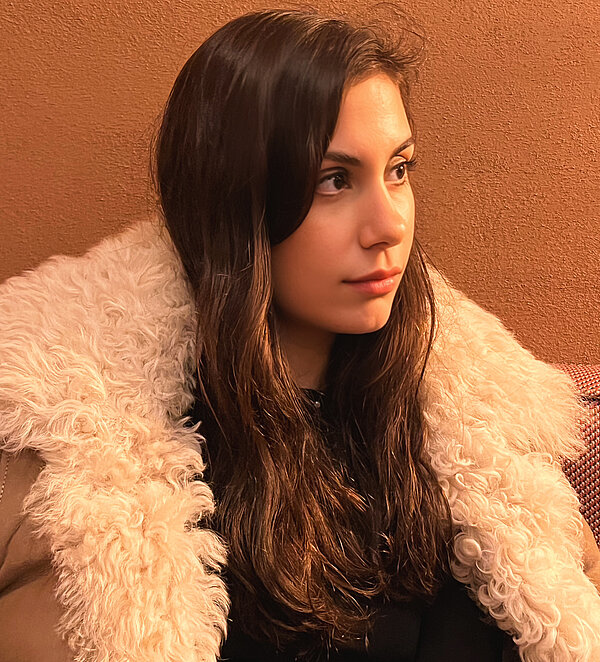
Residential Doctoral Fellow
Xena Amro is a PhD candidate in Comparative Literary Studies at Northwestern University, specializing in cross-temporal Arabic literary traditions with a focus on the Islamic risālah (epistle). Since 2022, she has held the position of graduate assistant at the Institute for the Study of Islamic Thought in Africa (ISITA), where she contributes to manuscript-centered pedagogy by digitally preserving rare Islamic manuscripts along with their transcriptions and translations. She has also worked as an editorial assistant for the Journal of Arabic Literature. In 2024, she was awarded both the Paris Program in Critical Theory fellowship at Université Sorbonne Nouvelle–Paris III and the John Hunwick Research Fund from ISITA, a grant she had also received in 2022 and 2023.
Research Project
Xena Amro’s dissertation examines the Arabic epistolary genre (al-risālah) as a literary, epistemological, and archival form across premodern and modern contexts. Rather than treating the risālah as mere administrative correspondence or a minor branch of adab, she argues that it serves as a site of knowledge production, mediating between public and private, clarity and concealment, rhetoric and philosophy. Central to her study is the concept of kitmān (withholding/concealment), theorized not simply as secrecy but as a deliberate literary and epistemological strategy. Through kitmān, she shows how scribes, secretaries, and intellectuals calibrated language, regulated access to knowledge, and structured authority. Tracing the risālah from the classical period to nineteenth-century revivalist writings, she explores its fragmentary archival legacy and how it dramatizes tensions between presence and absence, inscription and erasure. Ultimately, she argues for reading the risālah as a genre of ambiguity: fictional and factual, administrative and imaginative, stable yet always incomplete. Her research opens new perspectives on Islamic intellectual history, archival politics, and the epistemologies of literary form.